Posts

Booker T. Washington: Up From Slavery

Image
"I have learned that success is to be measured not so much by the position that one has reached in life as by the obstacles which he has overcome while trying to succeed" (BTW 586). The "Sage of Tuskegee," Booker T. Washington was born in slavery in 1856 in what is now West Virginia. He had reached the age of seven by the time of Emancipation (1863), and recalls in his autobiography Up From Slavery with characteristic lucidity and plaintive effect the joy that he witnessed among the adult slaves when word came that they were free. Booker T. Washington came of age during the period known as Reconstruction. This period immediately following the Civil War (1861-1864) in which the South slowly rebuilt its financial losses from the war, and African American slaves, free from the constraints of chattel slavery, were fleeing the North to find enfranchisement and escape the racial tension of the South. Aided by the Army and the Freedman's Bureau, a Republican coa...

February is African American History Month

Image
Q : Who was responsible for initiating African American History Month?  A : Carter G. Woodson Born in 1875 in Canton, Virginia, Woodson worked as a sharecropper to help support his family. He began his high school education in "his late teens," but proved to be a quick study: he completed a four-year course of study in half the time. Later he would complete his education at Berea College and earn his bachelor's and master's degrees at Harvard University, and ultimately earned his doctorate from Harvard. Later on he would become a co-founder of the Associate of Negro Life and History.  During this period of the early 20th century, the consensus among most white scholars was that the African American 'had no history': that his cultural background had been utterly stripped of him and long forgotten. However, thanks to intrepid scholars like Woodson, Arthur Schomburg, E. Franklin Frazier, and others, the rich history of African Americans became a seriou...

Harriet Jacobs, aka, Linda Brent: A Woman's Story of Slavery

Image
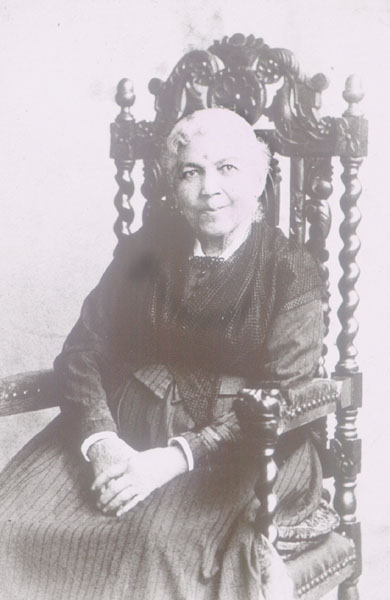
from docsouth.unc.edu "...I do earnestly desire to arouse the women of the North to a realizing sense of the condition of the two millions of women at the South, still in bondage, suffering what I suffered, and most of them far worse. I want to add my testimony to that of abler pens to convince the people of the Free States what Slavery really is. Only by experience can any one realize how deep, and dark, and foul is that pit of abominations. May the blessing of God rest upon this imperfect effort in behalf of my persecuted people" (Jacobs 281). Harriet Jacobs was born in Edenton, North Carolina in 1813 to Elijah Knox and Delilah Horniblow, both slaves. In accordance with the edict of the time, Harriet and her brother, John "followed the condition of their mother" in slavery. After Delilah died when Harriet was a mere six years old, the little girl went to live with her mother's mistress, Margaret Horniblow. The white mistress taught Harriet to read, a...

Charles W. Chesnutt: Cross-Section of Traditions

Image
*image from blackhistorynow.com Charles Waddell Chesnutt (1858-1932) was born in Cleveland, Ohio to freed persons of color, Anna Maria Samson and Andrew Chesnutt, a grocer and businessman. By the time he was nine, Chesnutt's family moved him to Fayateville, North Carolina, where the young boy was confronted with the racial divisions and worsening economy of the South. As he grew older into his teens, he became the vice-superintendent of the normal (teachers') school at Fayateville. He married his wife, Susan Perry in 1878 and moved North to escape the poverty and racism he encountered in Fayateville. With a law degree in hand, Chesnutt supported his family by working as a court stenographer while harboring ambitions of becoming a writer. His first short story to be published, "The Goophered Grapevine" was published in the national magazine The Atlantic Monthly in 1887, and in 1899, this and several other short stories appeared in a collection, The Conjure Wom...

Welcome!

Image
  Photo: Westchester University Welcome to ENGL 2055, African American Literature! I am very excited about sharing the next several weeks with you all. This semester is shaping up to be an informative and enriching one, and I have a lot to share with you, so let's get started. First, allow me to introduce myself. I am Dr. Julie Lester, and I am an associate professor of English here at Southwest. I have been teaching at the College for eight years, and before that, I earned my doctorate in African American Literature from the University of Memphis.  Why did I choose this subject? I was inspired by several of my college professors to read and study the work of Zora Neale Hurston (whom you will hear a lot about this course), and to read her most acclaimed novel, Their Eyes Were Watching God . Immediately I was drawn to her as a kindred: a familiar, and I was struck with the notion that we are all very much alike--regardless of a 'little pigmentation' (1). For me, Hurs...

Malcolm X

Image
El-Hajj Malik El-Shabazz, known to most as Malcolm X, was born Malcolm Little in 1925 in Omaha, Nebraska. His father was an outspoken Garveyite, who supported Marcus Garvey's views on separatism and racial politics. When his father was murdered by members of the KKK in Omaha, his mother was left to raise multiple children on her own--a task that led to her nervous breakdown and hospitalization. In his formative years, young Malcolm spent time in foster homes, moving from one family to another, before becoming involved in criminal activity. As your text reports, he was arrested and incarcerated for burglary in Massachusetts and it was there, in the Charlestown State Penitentiary, where Malcolm Little underwent a transformation. Embracing the teachings of Elijah Mohammad, Little began writing to the leader of the Nation of Islam from his prison cell. He would embark on his own, self-styled education, which enlightened him to the fact that the black man had largely been written out of...

The Black Arts Movement

Image
The Black Arts Movement (BAM) was the creative arm of the Black Power Movement. The term "Black Power" originated in part from a Richard Wright work by the same name, and was further coined by Stokely Carmichael, co-founder of Student Non-Violent Coordinating Committee (or "SNCC"). A philosophical movement that urged the need for African American autonomy through political and economic independence, the Black Power Movement gave rise to organizations such as the Black Panther Party. Huey P. Newton Eldridge Cleaver and Huey Newton Largely inspired by the writings of Malcolm X and Mao Tse-tung, the Black Panther Party advocated, in accordance with the philosophies of its co-founder Huey P. Newton, a policy of armed aggression against an oppressive, and corrupt white governmental infrastructure in the U.S. *From Huey P. Newton Website Photo taken by student, Christina Hill, March 2019 El Hajj Malik El Shabazz, or Malcolm X, whose ideology and ...